

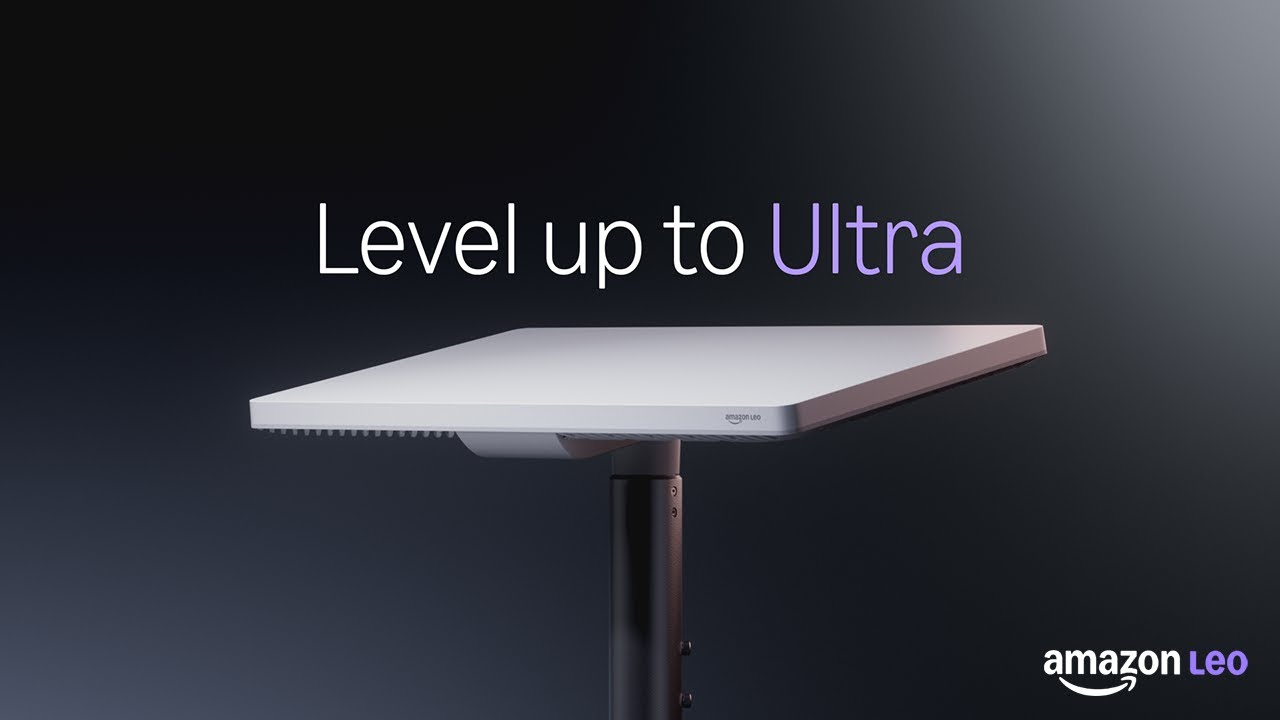

Amazon’s longtime “Project Kuiper” has been officially rebranded as Amazon Leo, and the company is now shipping out its first “Leo Ultra” satellite-internet terminals to select business customers for testing. The Ultra terminal is capable of delivering up to 1 Gbps download and 400 Mbps upload speeds, using a full-duplex phased-array antenna and custom Amazon silicon. Alongside the Ultra, Amazon is preparing a broader rollout that eventually should reach enterprises, remote offices, and even consumers.
At the moment, more than 150 of Leo’s low-Earth-orbit satellites are in orbit as part of Amazon’s growing constellation, with plans to launch thousands more by 2026 to meet coverage and regulatory requirements. For now, the service is aimed mainly at businesses — airlines, logistics firms, remote industrial operations — but the eventual goal appears to be far more ambitious: bringing broadband to places where traditional fiber or ground-based internet doesn’t exist, or is unreliable.
What’s particularly interesting this time around is how Amazon is positioning Leo not just as “internet from space,” but as part of a broader cloud-integration strategy. The service is built to tie directly into Amazon Web Services (AWS), giving enterprises secure, low-latency access to cloud workloads without routing traffic over the open internet. That could make Leo especially appealing for industries like energy, transportation, maritime, and remote infrastructure — essentially offering “data-center connectivity anywhere.”
If Leo succeeds in scaling up, it could meaningfully disrupt the current satellite broadband landscape, dominated by SpaceX’s Starlink. For users — especially those in remote or underserved areas — this could finally deliver high-speed internet that approaches what many city-dwellers take for granted, even in the middle of nowhere.