

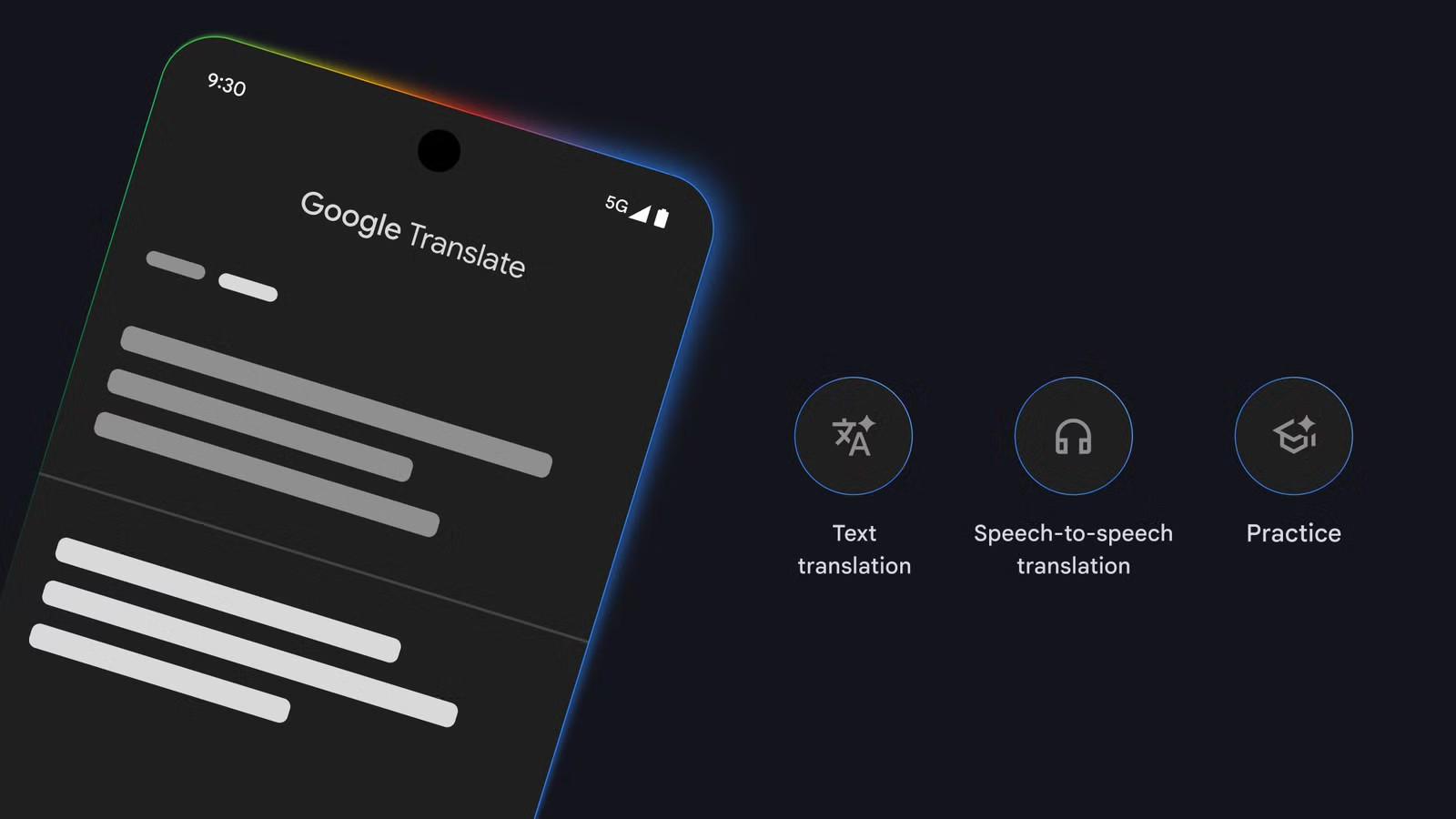

Google Translate is getting smarter — not by just translating text literally, but by grasping what you actually mean. With its latest update, the service moves beyond word-for-word rendering and can interpret intent, context, and nuance more accurately before producing a translation. This shift helps avoid many of the awkward or misleading results that traditional machine translation sometimes delivered.
The core improvement lies in deeper language understanding. Instead of mapping each word to its closest equivalent in another language, the updated system analyzes entire sentences as meaningful units. This allows it to capture tone, idioms, and implied meaning. For example, phrases that sound natural in one language but don’t translate directly — like casual expressions, cultural references, or conversational quirks — now come out in the target language in a way that feels far more natural and faithful to what the speaker intended.
Behind the scenes, this enhancement is powered by advanced AI models that have been trained to recognize patterns in real speech and writing. The models examine more than vocabulary; they examine relationships between words, sentence structure, and contextual clues that help them infer meaning. In practice, this means Translate can now handle tricky sentences with fewer mistakes and fewer unnatural turns of phrase.
Users will notice this most in longer passages or conversational text. Previously, Translate might have produced literal outcomes that sounded halting or stilted. Now, it strives for fluidity — turning idiomatic expressions, casual requests, or even humor into target languages without losing the original sense. This improves not just accuracy but readability, making translations feel more like they were crafted by a bilingual speaker, not a strict word mapper.
The update has also boosted Translate’s handling of languages that differ greatly in structure and syntax. When moving between languages with very different grammar rules, maintaining meaning has always been a challenge. The new system’s focus on intent helps bridge those gaps more gracefully, reducing errors that used to trip up even seasoned users.
For everyday users, the impact is clear: whether you’re reading a foreign article, chatting with a friend in another language, or navigating signs and menus when traveling, translated text now feels more intuitive and closer to how humans actually communicate. It brings Google Translate closer to the ideal of meaningful rather than merely literal translation.
This isn’t the final chapter for Translate, but it’s a significant step toward a future where language barriers feel less like barriers and more like bridges.