
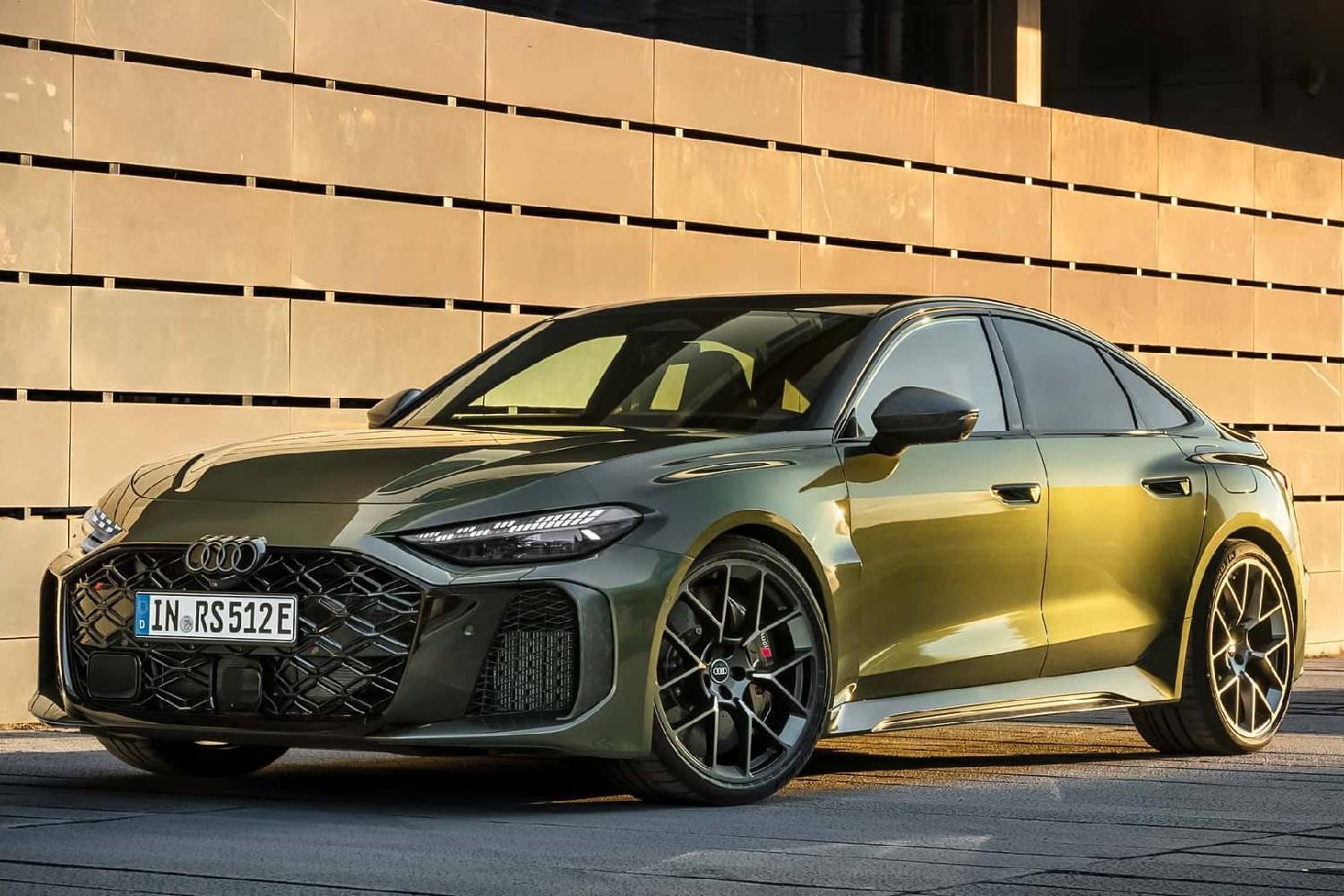

Audi has unveiled the 2026 RS5, positioning it as a high-performance answer to European emissions regulations without abandoning the brand’s long-standing RS character. The new RS5 adopts a plug-in hybrid configuration with a quoted combined output of 630 hp and 825 Nm, underscoring how electrification is now central to sustaining performance cars in regulated markets.
At the heart of the package is a 2.9-liter twin-turbo V6 working in tandem with a 174-hp electric motor. Audi claims the setup enables a 0–100 km/h sprint in 3.6 seconds, while also providing an all-electric driving range of 87 km—a specification that pushes the RS5 beyond weekend performance use and into more practical, low-emission daily operation.
The most consequential trade-off is mass. The RS5 Avant is quoted at 2,370 kg, described as heavier than the RS6. In plug-in hybrids, added weight typically comes from battery capacity and hybrid hardware, which can influence braking loads, cornering behavior, and overall agility—areas where RS models are traditionally judged as much as by straight-line acceleration.
Design cues remain aggressively performance-focused, with large air intakes and signature exhaust outlets reinforcing the RS identity. While the available details emphasize styling, such elements in performance cars are often closely tied to cooling and airflow management—critical considerations when packaging high output alongside electrified components.
iTDAY Analysis: The 2026 RS5 illustrates the industry’s new performance equation: maintaining supercar-adjacent acceleration figures while absorbing the complexity and weight of hybridization. The key question shifts from raw power to how effectively Audi’s chassis and control systems can preserve the RS hallmark of precision under the burden of 2,370 kg, especially as buyers increasingly compare “feel” and responsiveness—not just spec-sheet numbers.
In Germany, the 2026 RS5 starts at €106,200, with deliveries expected in early 2026.